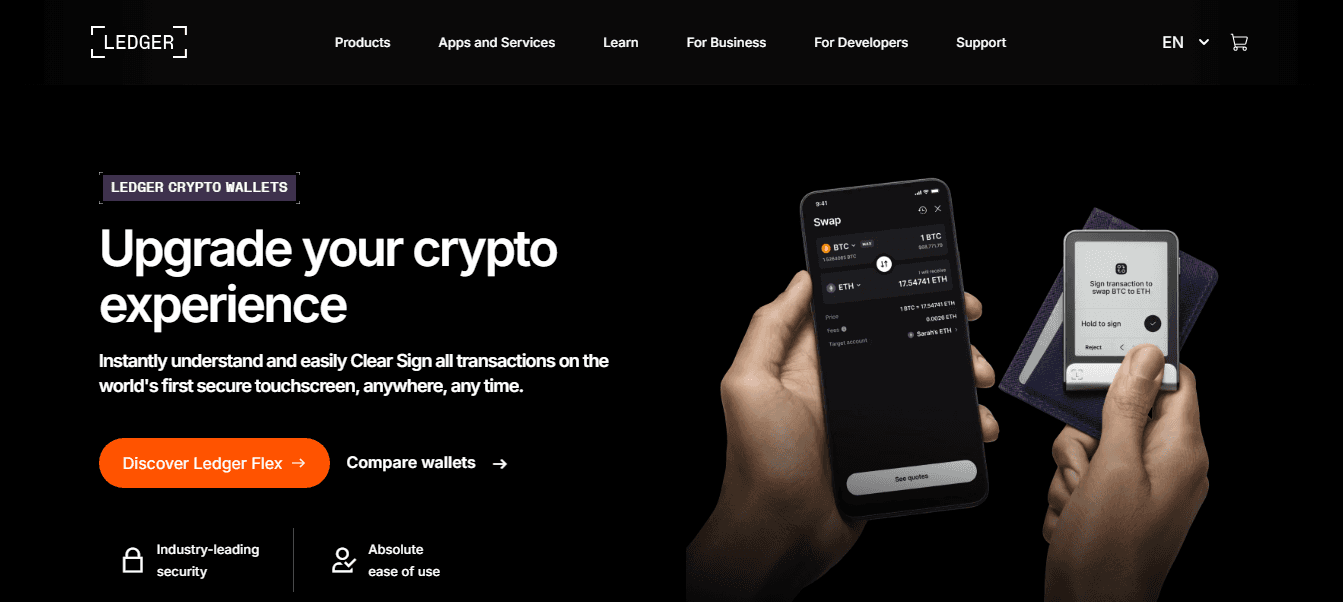
Ledger Login: A Comprehensive 1200-Word Overview
When people talk about “Ledger login,” they usually mean the process of accessing Ledger’s ecosystem—mainly Ledger Live and the interaction between the app and a Ledger hardware wallet. Unlike many traditional online services, Ledger does not use a username and password system. Instead, its “login” relies on secure hardware, physical confirmation, and cryptographic design. Understanding how this system works is important for grasping why Ledger devices are widely known for their security.
This guide explains the concept of Ledger login from an educational perspective—not as instructions for accessing an account but as an overview of how Ledger’s system handles identity, protection, and account access.
1. The Meaning of “Ledger Login”
Many websites require a typical login—email, password, and sometimes two-factor authentication. Ledger takes a very different approach. Because Ledger is a hardware-based security ecosystem, the “login” is essentially the moment when the Ledger device connects to Ledger Live and the user validates their presence through physical interaction with the device.
There is no online account to log into for basic use. Ledger’s philosophy is built around the idea that private keys never leave the hardware wallet and that the device itself is the identity layer. Ledger Live simply acts as the interface that reads account information and allows users to manage supported networks.
So, “Ledger login” refers less to entering credentials and more to establishing a secure, verified connection between software and hardware.
2. Why Ledger Uses a Hardware-Based Access Model
Ledger’s model avoids centralized logins because the company wants to prevent private information from being stored on remote servers. This reduces risk, since centralized databases can sometimes be targeted by attackers. With a decentralized, device-based model:
Only the hardware wallet contains the critical private keys.
Ledger Live reads public data, not sensitive keys.
Access requires physical confirmation on the device.
No cloud-based login can be compromised to access the wallet.
This approach puts control directly in the user’s hands. Even if the computer running Ledger Live is compromised, the hardware wallet still blocks unauthorized actions through its physical confirmation process.
3. Ledger Live as the Access Interface
Ledger Live is the primary platform people use when handling assets through a Ledger device. It shows portfolio information, organizes accounts, and offers tools for viewing supported networks.
When someone opens Ledger Live, the experience resembles logging into a dashboard—except instead of entering credentials, they connect their Ledger hardware wallet. Ledger Live treats the presence of the hardware device as the authentication method.
Ledger Live typically displays a clean layout with the following sections:
Portfolio
A visual summary of all assets associated with the connected Ledger device. This includes charts, trends, and asset values.
Accounts
A list of all crypto network accounts the user has imported into Ledger Live. Each account contains balance details, activity history, and network-specific features.
Manager
The app installation and update hub for the hardware device. It helps manage what network apps are stored on the Ledger device.
Discover
A section that offers optional tools, educational content, and integrations to expand the Ledger experience.
Ledger Live serves as the “control panel,” while the hardware wallet acts as the “key” that unlocks access.
4. How Ledger Ensures Secure Access
Ledger’s security model revolves around multiple layers:
Hardware-Based Verification
Instead of a password typed into a computer, Ledger requires PIN entry directly on the hardware wallet. This step ensures that only the person holding the device can use it.
Physical Confirmation
Every significant action—such as sending assets—must be confirmed manually by pressing the physical buttons on the hardware wallet. Even if someone controlled the computer remotely, they couldn’t force a transaction without physical access to the device.
Isolation of Private Keys
The private keys never appear on Ledger Live, never touch the internet, and never leave the secure chip inside the hardware wallet.
No Traditional Login System
Ledger does not store or manage private keys, passwords, or user accounts in a database. This greatly reduces exposure to large-scale attacks.
Through these elements, Ledger replaces the idea of an online login with a “trustless” access structure that depends only on possession of—and physical control over—the hardware wallet.
5. What Happens Behind the Scenes
When a Ledger device connects to Ledger Live, the app communicates with the device to confirm:
The device is genuine.
The device is unlocked using its PIN.
The internal apps correspond to the networks the user wants to manage.
Ledger Live then synchronizes blockchain data (like balances and transaction history). None of the sensitive information—such as private keys or recovery phrases—is transmitted or displayed.
This behind-the-scenes process serves as the equivalent of identity verification but without the need for usernames, passwords, or biometrics.
6. Why There Is No Remote Login
A traditional remote login system would allow access from different devices or locations. Ledger intentionally avoids this. Remote logins rely on remote servers, which can be vulnerable. Also, remote access could theoretically allow someone to log in and attempt actions without physically possessing the hardware wallet.
By requiring the physical device:
Ledger ensures true ownership.
Ledger avoids storing user data remotely.
Ledger eliminates the possibility of unauthorized remote access.
This model aligns with the principles of self-custody and cryptographic security.
7. “Ledger Login” in the Context of Safety and Responsibility
For younger users, it’s important to understand that Ledger Live and hardware wallets are tools commonly used for managing digital assets—a field that often includes age restrictions depending on laws and platforms. This explanation is provided strictly for educational understanding, not for guiding access to services that may require adults or legal verification.
The concept of Ledger login itself is about security design, not about creating an account or joining a platform. The system is meant to demonstrate how hardware-based protection works rather than to provide a typical sign-in method.
8. How Ledger Encourages Safe Usage
Ledger incorporates several optional safety features that act alongside the hardware device:
Local App Lock
Users can set a password that prevents unauthorized people from opening Ledger Live on their computer. This protects portfolio visibility.
Privacy Settings
These settings let users adjust how much data Ledger Live stores locally and what information the app displays on the dashboard.
Firmware and Software Updates
These updates keep the device safe from emerging vulnerabilities and help maintain compatibility with different networks.
Clear-Warning System
Whenever something requires confirmation, Ledger devices show detailed information on their screens. This helps prevent accidental transfers or interactions.
9. The Broader Philosophy Behind Ledger’s Login System
Ledger’s login method reflects its broader mission: giving individuals control over their digital assets while reducing reliance on outside systems. The brand’s approach is based on three main principles:
Control
Only the person holding the hardware wallet can approve actions.
Privacy
No outside server stores personal login credentials or private keys.
Security
All sensitive processes happen within the secure element of the hardware wallet.
This philosophy protects users by ensuring that access remains local, physical, and cryptographically verified.
10. Conclusion
“Ledger login” isn't a traditional online sign-in. It’s a secure interaction between Ledger Live and a Ledger hardware wallet—an access model built to ensure privacy, safety, and user control. Instead of relying on passwords or online accounts, Ledger uses physical verification, offline key storage, and device-based authentication.
This structure protects digital assets by keeping sensitive information offline and requiring human confirmation for important actions. Ledger’s approach demonstrates how hardware-based security can replace conventional logins with a more resilient and direct model.